Lower grades taste sharper and more bitter, which is why they usually end up in baking or hidden under sugar. That’s the short answer. The longer one is worth knowing if you’re choosing a matcha bar for an event, because the grade decides what your guests actually taste.
How ceremonial matcha is made
- 01 · Shade3 to 4 weeks under coverMore chlorophyll and L-theanine. Brighter green, sweeter taste.
- 02 · Steam and dryFirst spring harvestStems and veins removed. What’s left is tencha.
- 03 · Stone grindSlow granite millsFiner than flour, and slow so the leaf never heats up.
It starts weeks before harvest. Farmers cover the tea plants to block most of the sunlight, usually for three to four weeks. With less sun, the leaves make more chlorophyll and hold on to more L-theanine, the amino acid behind matcha’s sweet, savory taste and its calm kind of energy. That’s where the bright green color comes from too.
The best matcha uses the first spring harvest, when the leaves are youngest and most tender. After picking, the leaves are steamed, dried, and stripped of stems and veins. What’s left is called tencha.
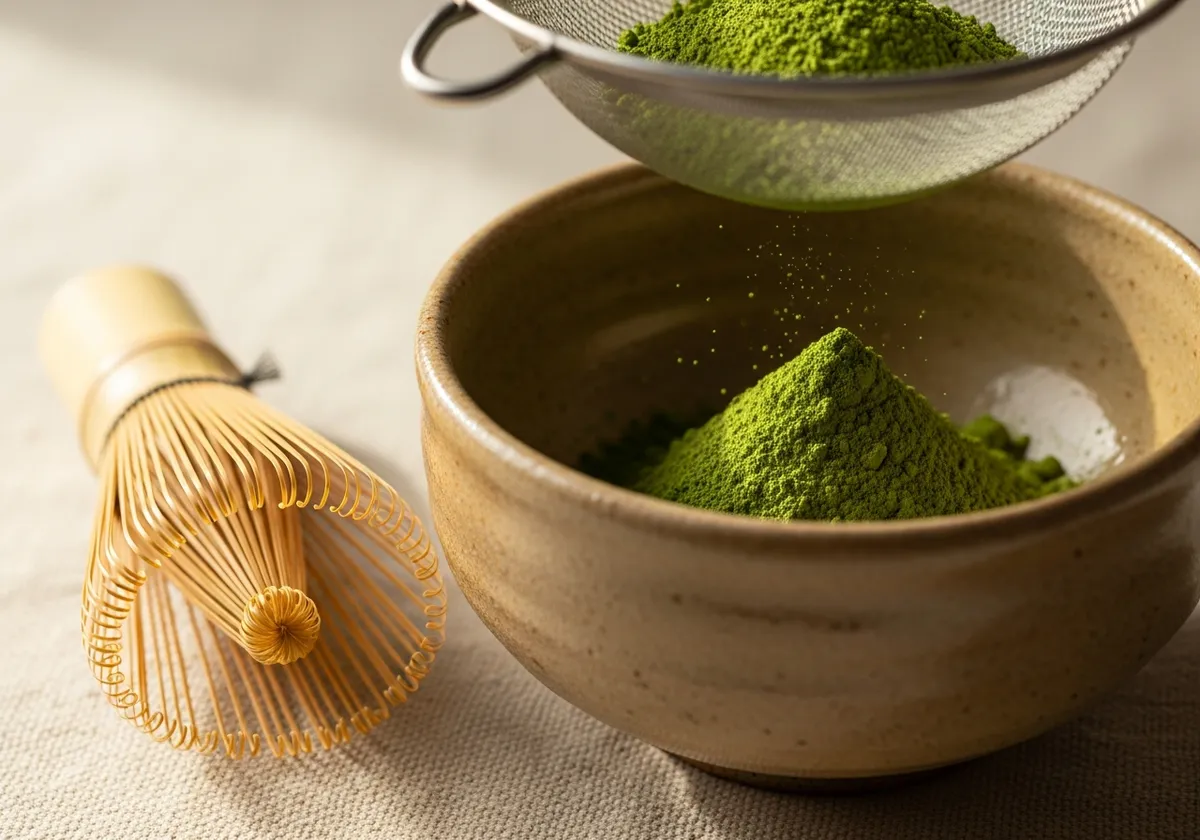
Then the tencha is ground on slow granite stone mills into a powder finer than flour. A single mill makes only a small amount each hour, because grinding faster heats the leaf and dulls the flavor. That slow step is a big part of why good matcha costs what it does.
You drink the whole leaf. With steeped green tea you throw the leaves away, so matcha tastes fuller and carries more of everything in the leaf, caffeine included.
Ceremonial vs culinary grade
Culinary grade comes from later harvests and older leaves. It’s cheaper and stronger, which suits muffins, ice cream, and sweet blended drinks where the matcha has to fight through sugar and fat. Drunk on its own, it tastes grassy and bitter.
| Ceremonial grade | Culinary grade | |
|---|---|---|
| Harvest | First spring harvest, youngest leaves | Later harvests, older leaves |
| Color | Bright, vivid green | Duller, olive or yellow green |
| Taste | Smooth, sweet, savory, little bitterness | Sharp, bitter, astringent |
| Texture | Silky, very fine | Coarser |
| Best for | Drinking straight or in a simple latte | Baking, cooking, sweet blended drinks |
There are grades in between. Some brands sell “premium” or “latte grade” matcha that sits closer to one end or the other.
The label isn’t a guarantee
There’s no official standard for “ceremonial grade.” Japan doesn’t grade matcha that way. The term mostly took off with Western sellers, so anyone can print it on a tin. A few things tell you more than the label does.
Why the grade matters at your event
At a wedding or a company event, plenty of guests have never had good matcha. If the first cup they try is bitter and syrupy, that’s what they’ll think matcha tastes like. Grade is the difference between a drink people line up for again and one they leave half full on a cocktail table.
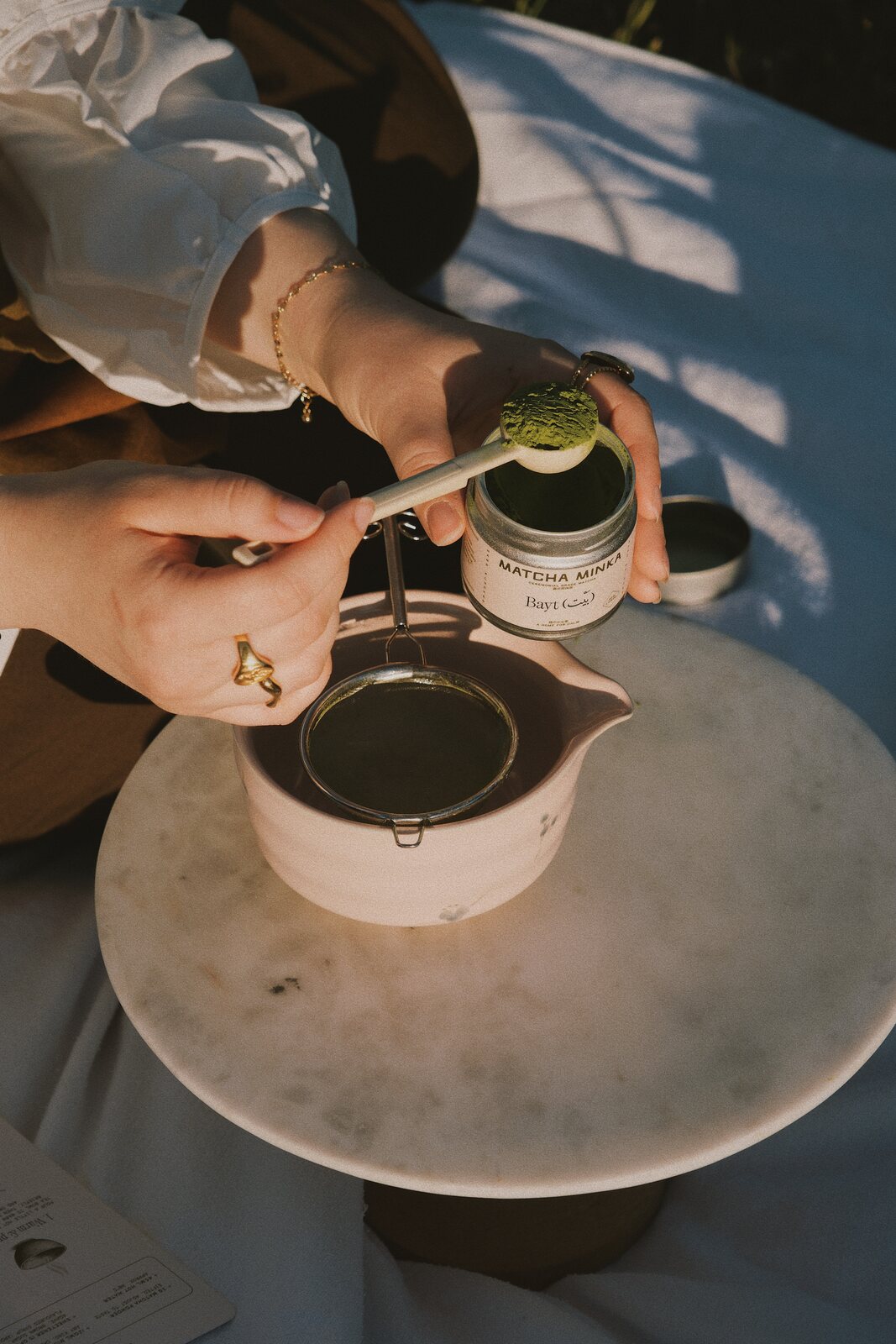
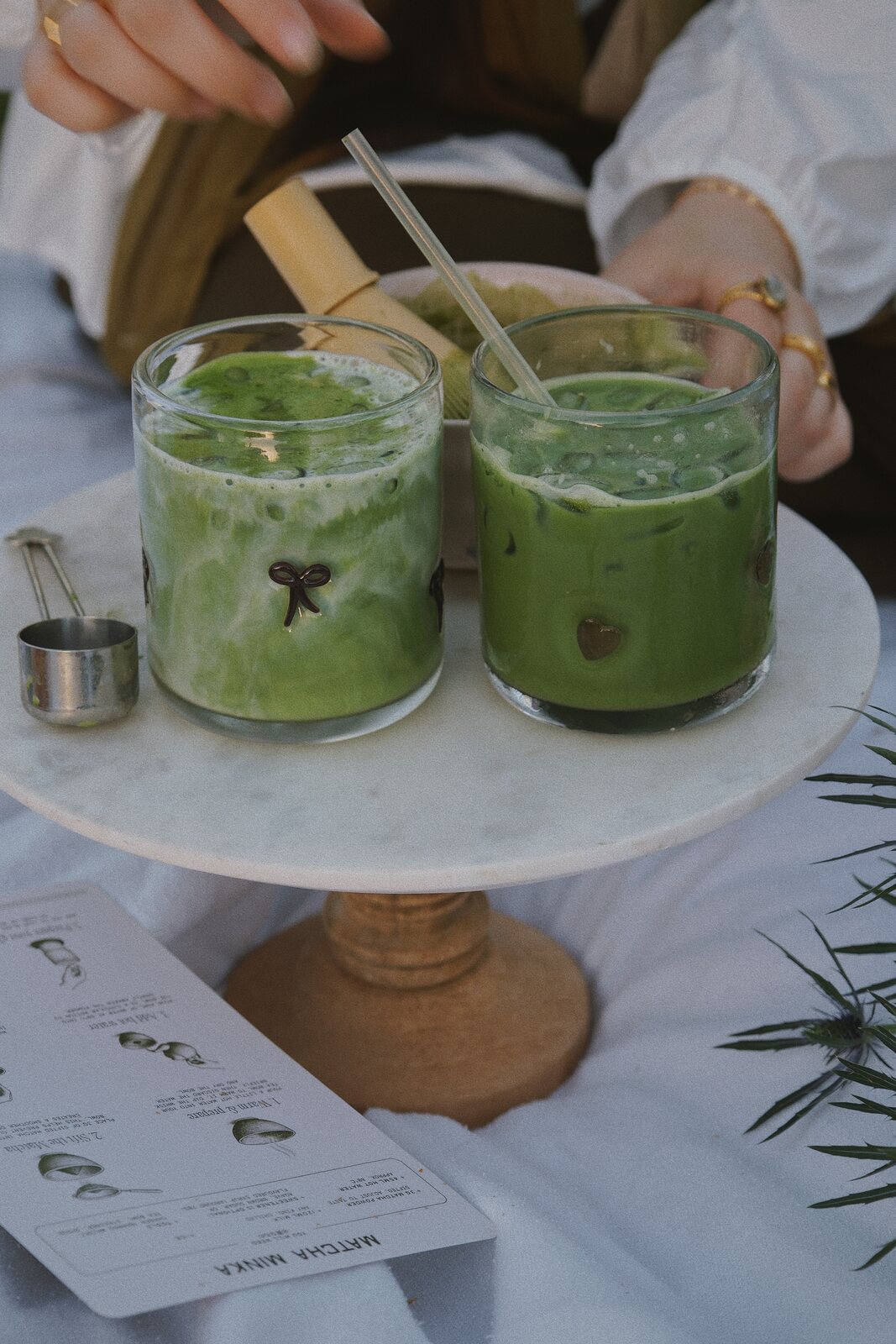
At Matcha Minka we use ceremonial grade matcha bought directly from farmers in Japan. It comes from Uji, near Kyoto, one of the oldest and best known matcha regions in Japan. Every syrup is made in house, so the strawberry, vanilla, banana pie, and vanilla fig flavors sit next to the matcha instead of covering it. Guests choose whole milk or oat milk, sweetened or not. You can see the full lineup on our menu.
If you’re planning a wedding or a corporate event in San Francisco or around the Bay Area, tell us the date and guest count and we’ll send a proposal.
Questions people ask
How much caffeine is in ceremonial matcha?
A typical drink made with about 2 grams of matcha has roughly 60 to 70 mg of caffeine, a bit less than a regular cup of coffee. The L-theanine smooths it out, so most people feel alert without the jitters or the crash.
Is ceremonial matcha wasted in a latte?
It shows up more than you’d think. Milk softens bitterness, but it can’t add sweetness or depth that isn’t in the powder. A latte made with good matcha tastes like tea. One made with cheap matcha mostly tastes like milk and sugar.
Does ceremonial matcha taste like grass?
Good ceremonial matcha tastes fresh and green, more like sweet spring vegetables than cut grass, with a creamy finish. A strong grassy or fishy taste usually means low grade or old powder.